Sign in as admin to see the full pipeline; sign in as a sales rep to see the per-rep view. Data is reset periodically.
Where the leads were going
01Pivu had been doing the trade-show circuit for years - JCK Las Vegas, Centurion, regional shows, partnership meetings, occasional referrals. The product side of the business was sound. The conversion side wasn't. A retailer would walk up to the booth, ask the right questions, hand over a card, and then disappear into the post-show silence. He'd come home with a hundred business cards and the genuine intention to follow up - and somewhere between the flight back and the next show, the thread would drop.
He'd tried the standard tools. HubSpot is built for SaaS pipelines. Salesforce expects a quarter to configure. Pipedrive doesn't know what a trade show is. The closest fit was a paid CRM with a "jewelry industry" template that turned out to be a coat of paint over the same generic deal pipeline. None of them modelled the part of the business that actually mattered to him: leads attributed to the show they came from, demos booked across three time zones, and a follow-up cadence that knew the difference between just met them at the show and they've placed their first order.
What he wanted, when he wrote it out, was a sales CRM that thought in jewelry-retail stages - New → Demo Scheduled → Demo Completed → First Request Submitted → First Order Placed → Active Customer - and a system that nagged him before each stage went stale.
The pipeline, as a funnel
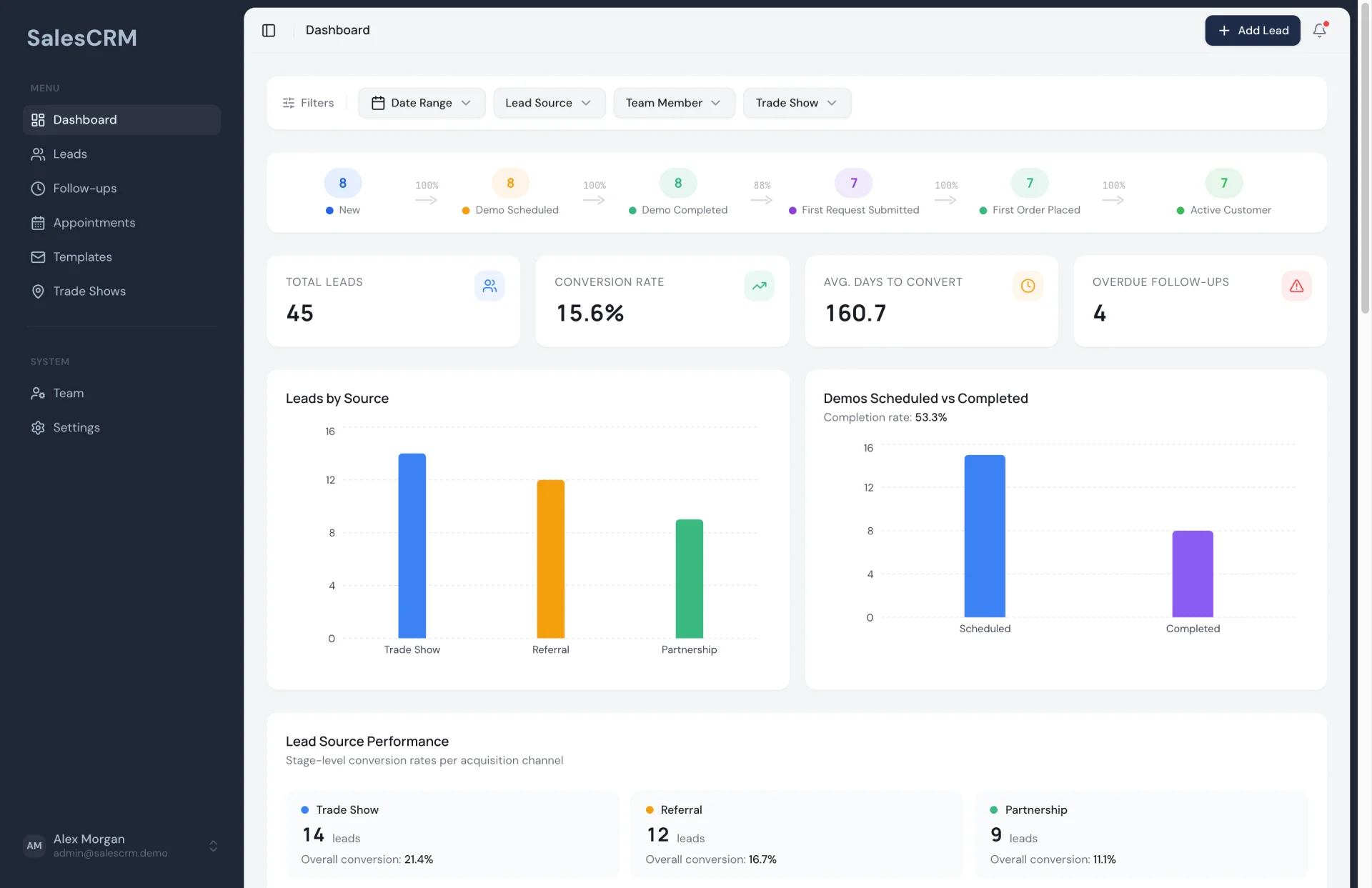
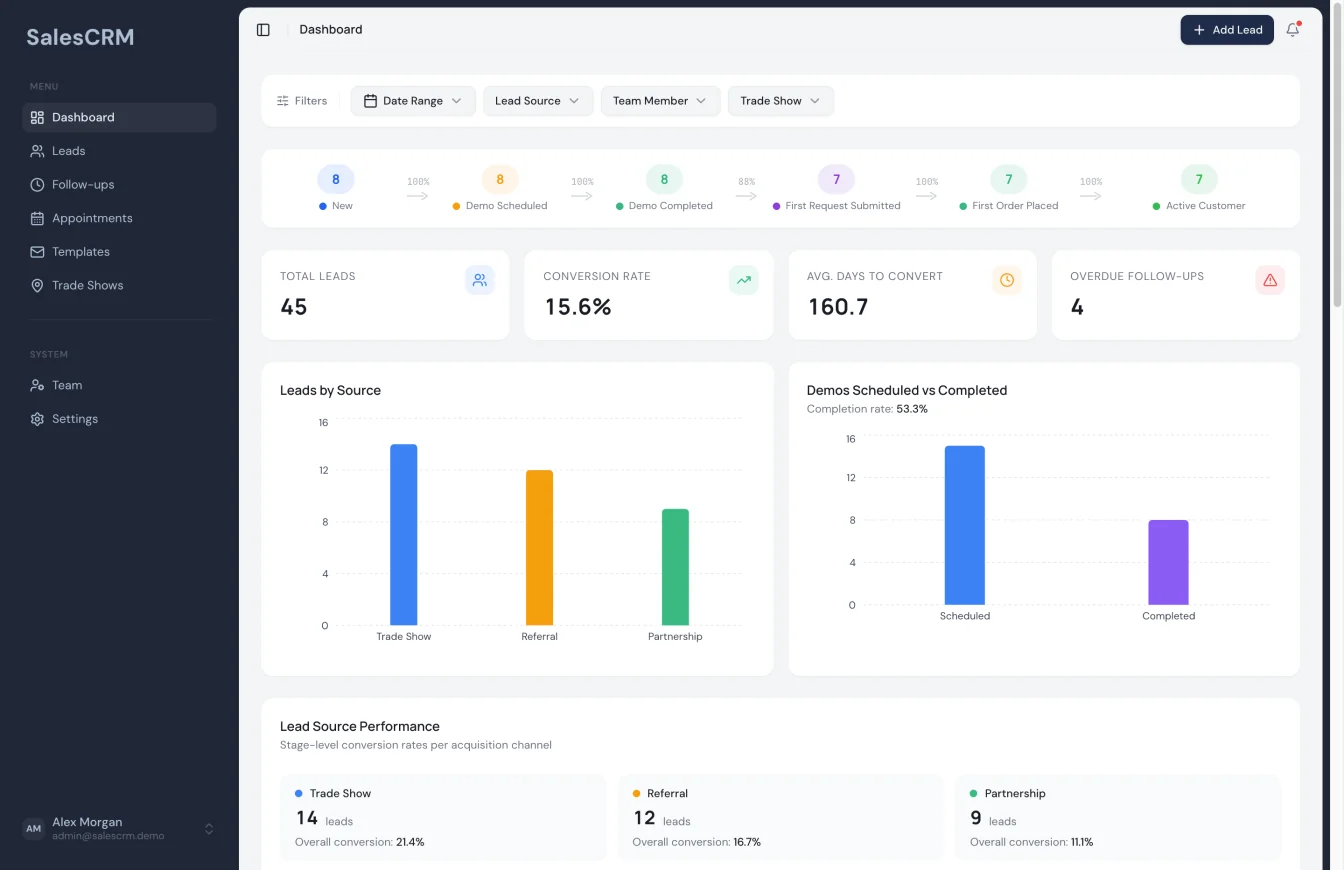
02The dashboard opens with the funnel itself. Six stages, lead counts above each dot, and stage-to-stage conversion percentages between them. Total leads, conversion rate, average days to convert, overdue follow-ups - the four numbers a sales lead actually checks each morning, then Leads by Source and Demos Scheduled vs Completed charts underneath, then Lead Source Performance broken out by trade show, referral, and partnership.
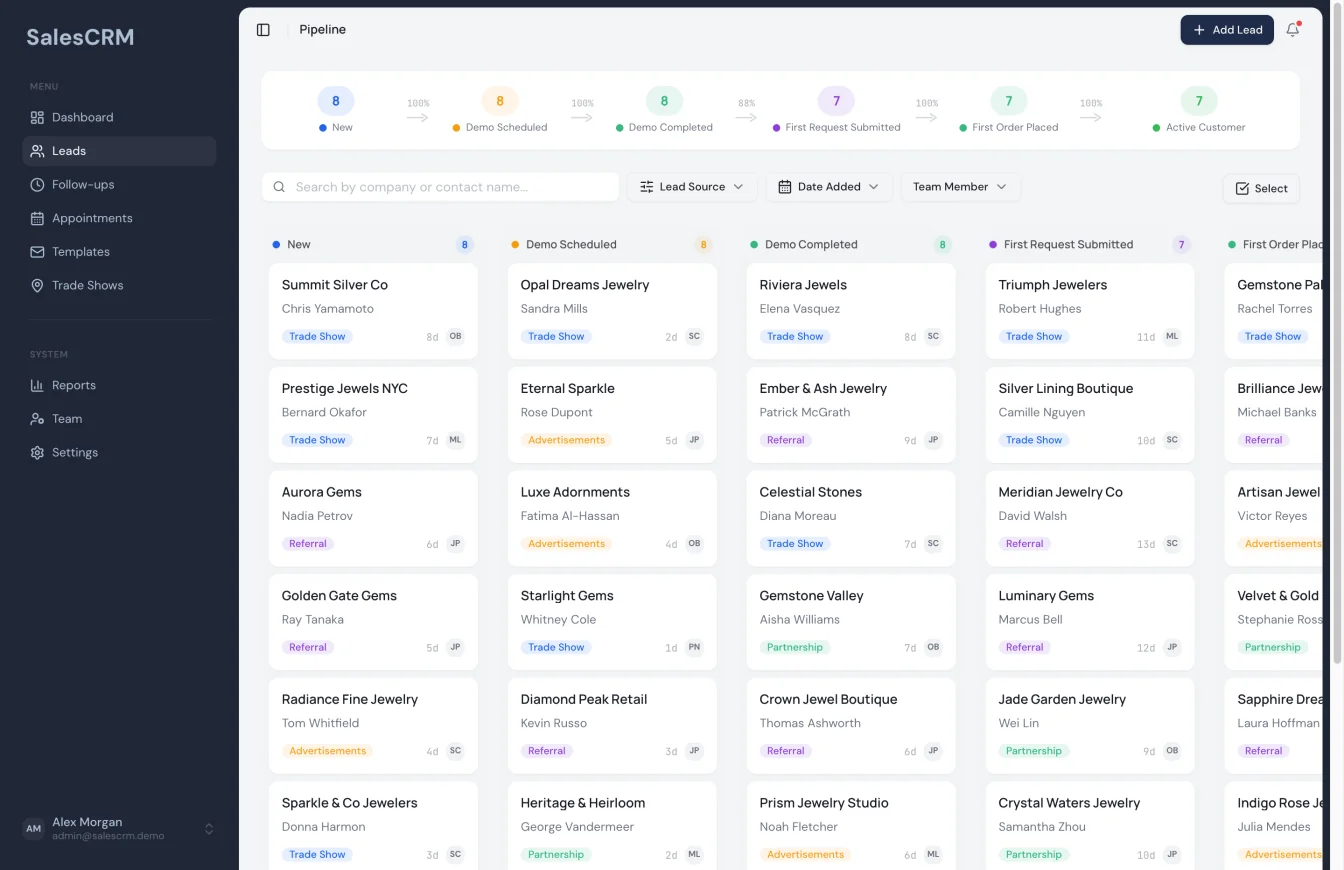
The same funnel sits across the top of the Leads view, where pipeline becomes a Kanban - leads grouped by stage, source-tagged, dragged forward as they move. New sits next to Demo Scheduled sits next to Demo Completed - the buyer's journey laid out left-to-right, the way Pivu was already drawing it on whiteboards before the product existed.
What the system does when you don't
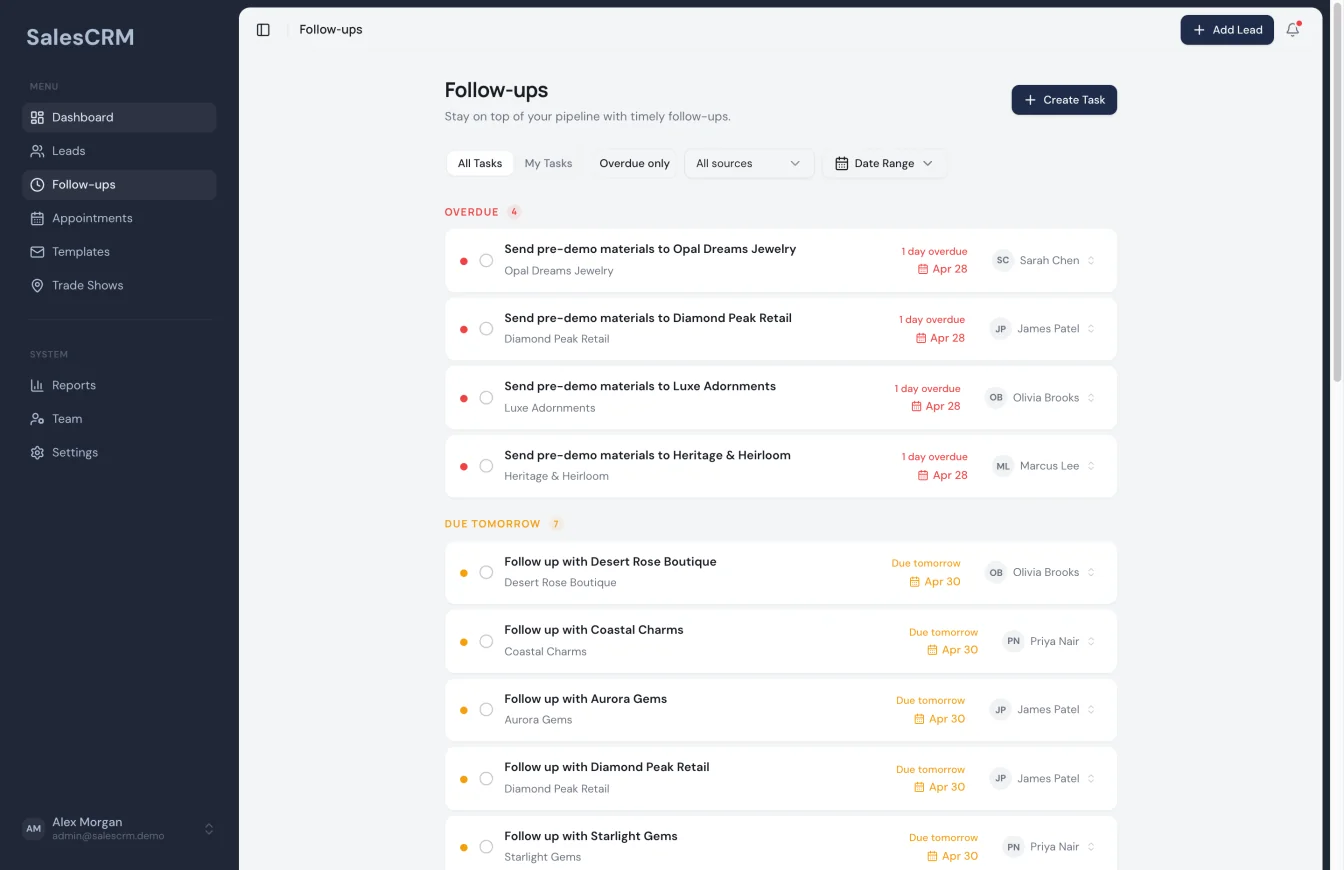
03The hard part of a trade-show pipeline isn't capture - it's the days afterward. SalesCRM creates follow-up tasks automatically by stage: a 2-business-day check-in for new leads, a 24-hour reminder before each demo, a 3-day post-demo follow-up, a 7-day nudge while waiting for a first request, a 2-week check-in after the first order. Each task lands in the rep's Follow-ups view and their inbox via Resend, so the rep doesn't have to be inside the CRM to know a lead is going stale.
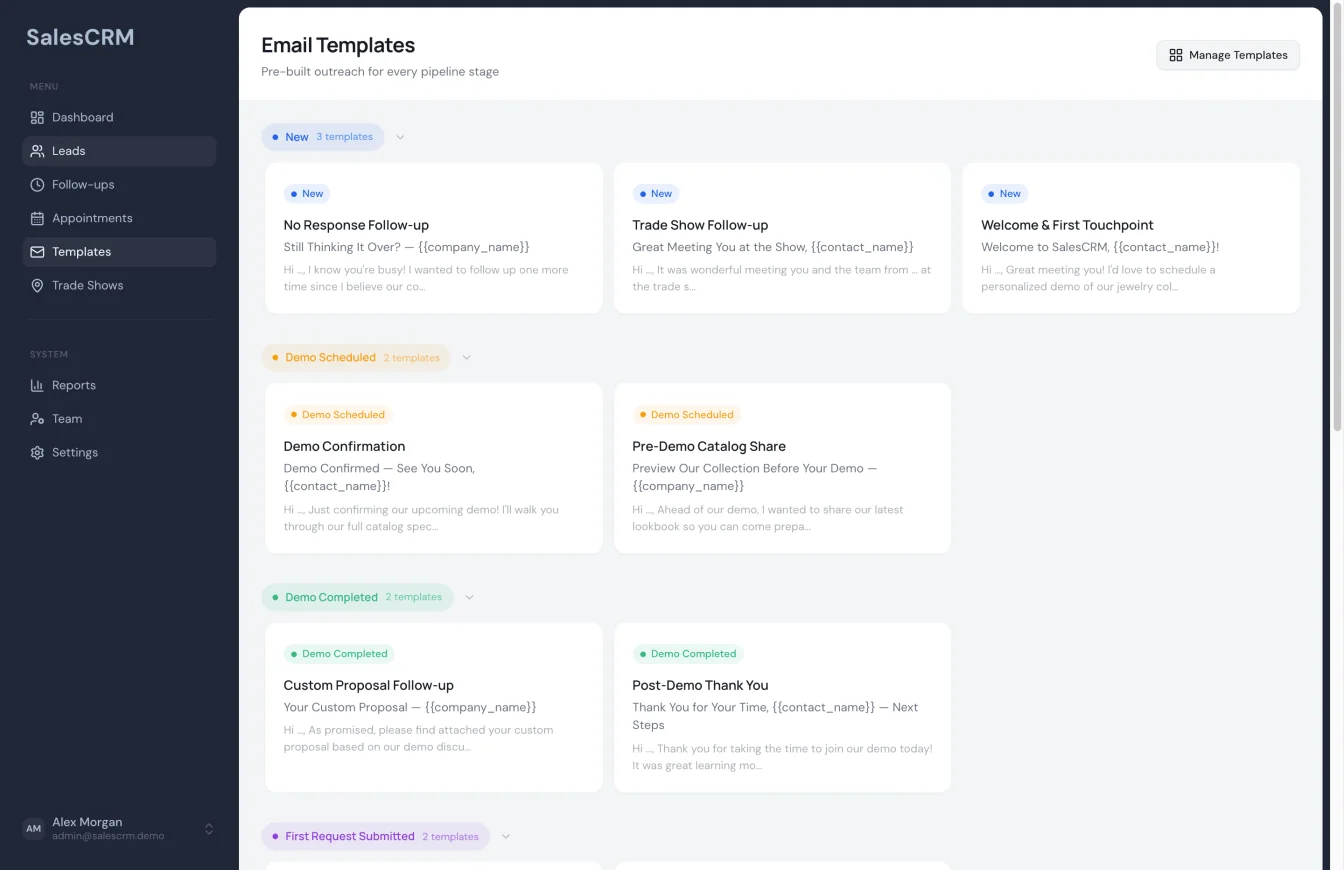
Underneath the tasks sits the email layer. Pre-built templates for every stage - No Response Follow-up, Trade Show Follow-up, Welcome & First Touchpoint, Demo Confirmation, Pre-Demo Catalog Share, Custom Proposal Follow-up, Post-Demo Thank You - each with {{company_name}} / {{contact_name}} / {{rep_name}} merge fields. The rep picks the template, the system fills the variables, the message goes through Resend, and the send lands on the lead's timeline.
The booking link, with time zones in the right place
04Trade shows happen in the show's time zone. Virtual demos happen in the customer's. SalesCRM holds both. Each trade show gets its own bookable event with location, dates, and a unique booking link - the link is the artifact a sales rep drops on the back of a business card. The customer picks a slot in Pacific Time at the Venetian, the system confirms both sides, the appointment lands in Google Calendar, and the lead is auto-tagged to the show it came from.
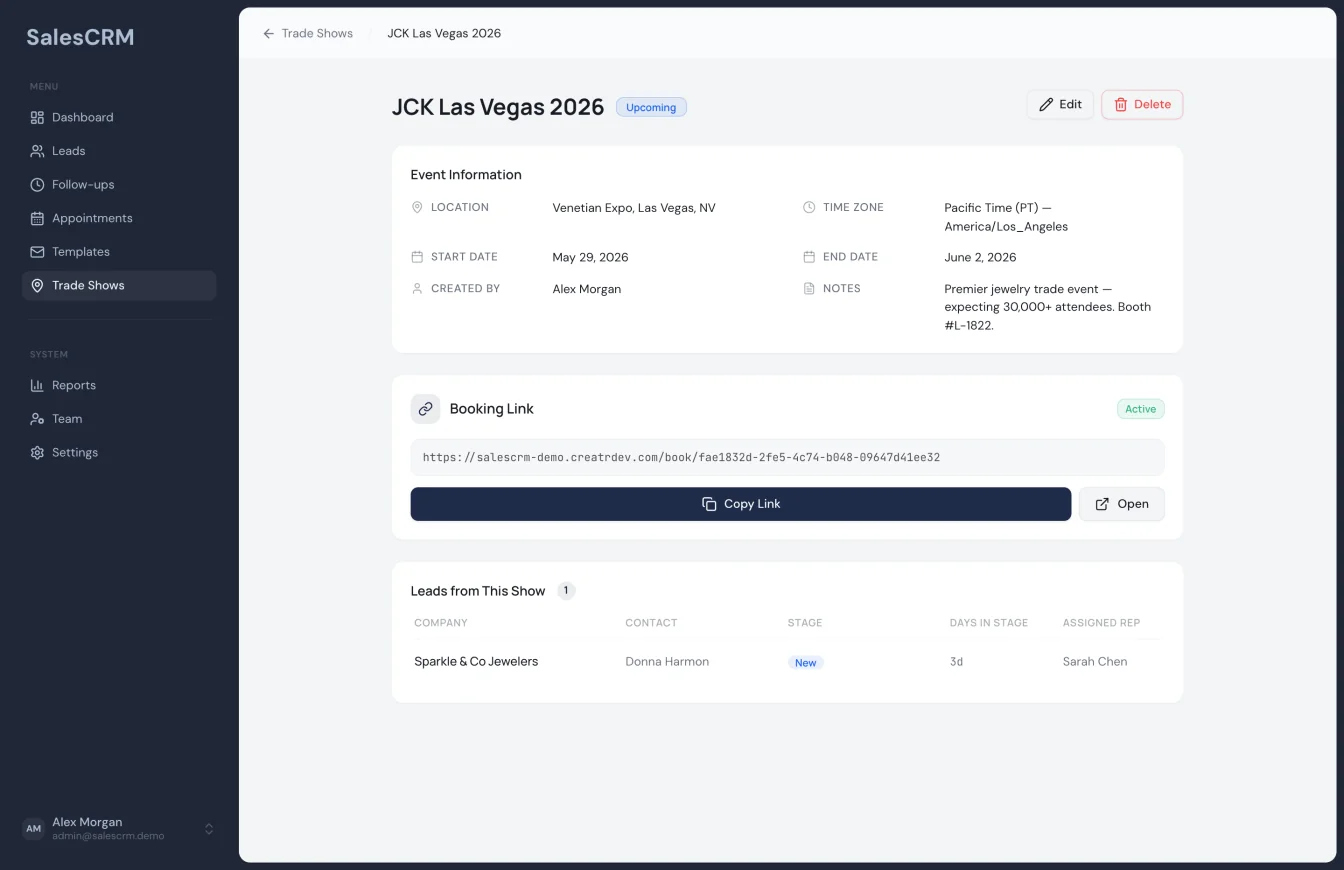
Bookings made before a lead exists in the CRM are flagged for the rep to review and convert into a proper lead - so the booking flow never gets blocked on a missing record, but every show appointment ends up traceable.
Roles, restricted by design
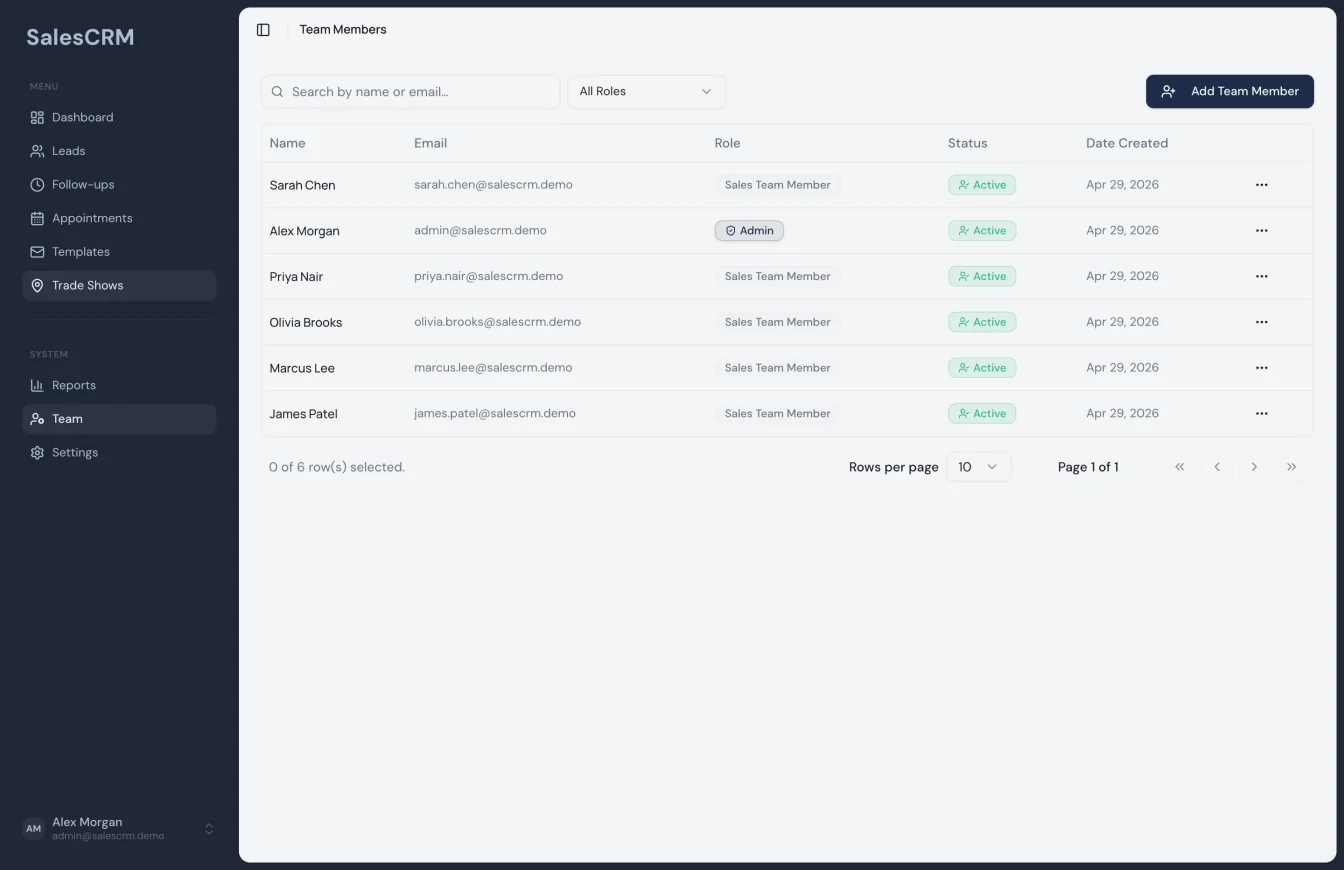
05Pivu has a small team. Sarah, James, Olivia, Marcus, and Priya. Each rep sees only the leads they own or personally added - partnership pipelines stay separate, client confidentiality stays intact, and admins (only Pivu, today) see the whole pipeline. New team members are invite-only: an admin creates the account, the rep sets a password and starts working leads the same day.
Underneath
06Postgres holds the leads, stages, tasks, templates, and trade shows. Resend ships the transactional mail and the templated outreach. Google Calendar two-way sync keeps the booking link honest - blocked time stays blocked, accepted demos appear on the rep's calendar without copying. Cloudflare R2 holds attachments - quotes, contracts, design files - against the lead's timeline. Webhooks from Pivu's existing customer portal roll the lead's status forward automatically: first request submitted trips the First Request Submitted stage; first order shipped trips First Order Placed with an admin override if a fulfillment hiccup means the rep wants to hold it back.
The signal under all of it is small: the pipeline that mattered to Pivu was six stages, source-attributed, time-zone aware, role-scoped, and naggy by default. Off-the-shelf CRMs gave him five of those, but never the six together.
I had a drawer of business cards. Now I have a system that tells me which one to call before they go cold. The CRMs I'd tried before either felt empty or felt like they were built for somebody else's business. This one knows what a trade show is.
What changed
07The drawer is empty. The pipeline isn't. The distance between met them at the booth and first order placed used to be measured in did anyone follow up; it's now measured in days, with the days visible on the dashboard. That's the part the off-the-shelf tools weren't doing.
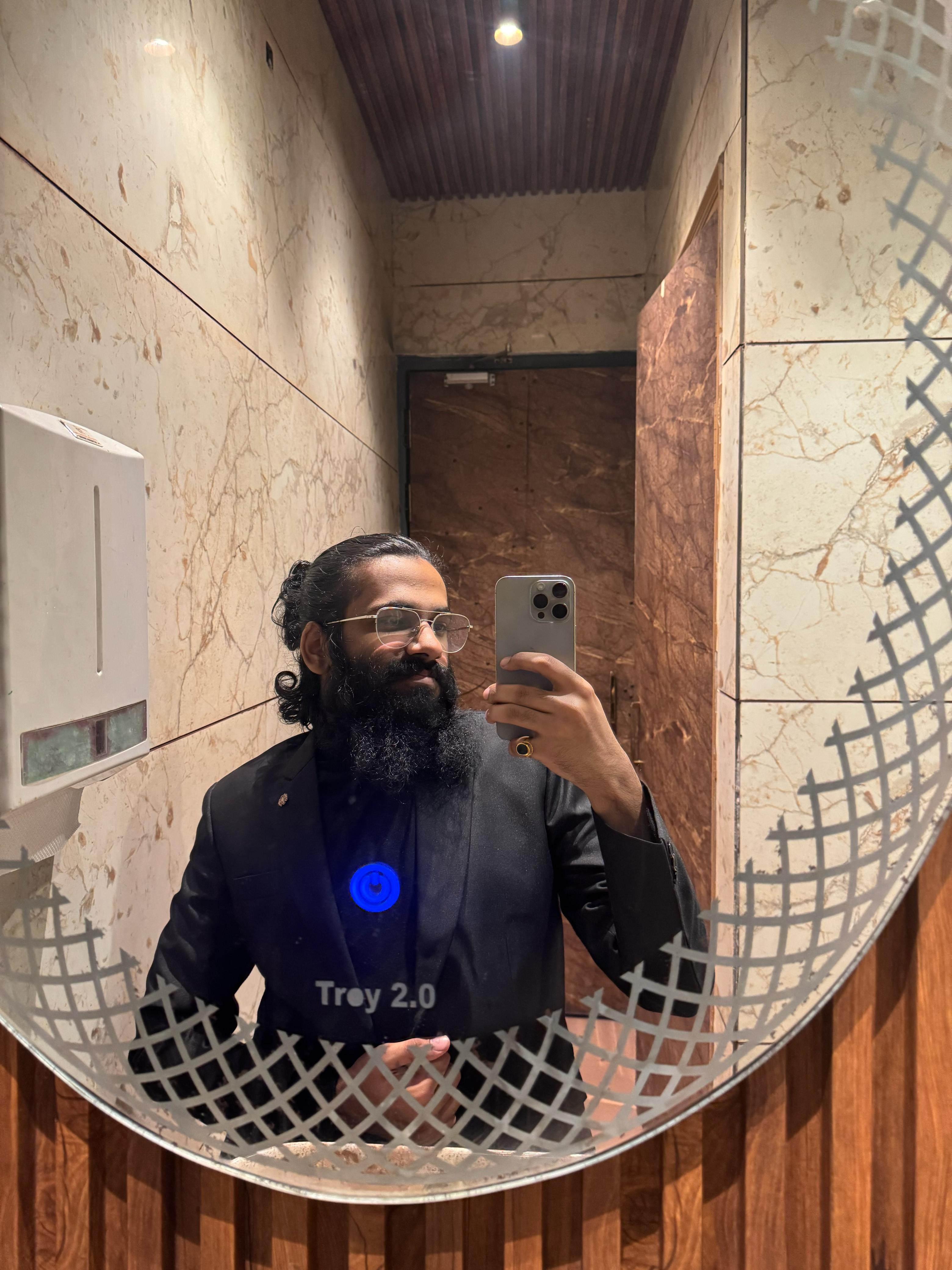
Co-founder and CTO of Creatr, building DeepBuild: the system that ships production web apps in 24 hours. Prince's open-source WhatsApp userbot, BotsApp, earned 5.5k GitHub stars and 1.3k forks during his college years. He later ran a solo freelance engineering practice to $100K in revenue before co-founding Creatr.