Why is building softwares so hard?

You know what's wild?
We're in 2026, and building software efficiently is still… kind of a mess!
Like, let's say you have an idea. A real one. Something you actually want to ship, which will help you scale your business.
So you go the obvious route.
The Vibe coding tool everyone starts with
Around 2023, something shifted.
You could describe what you wanted in plain English and watch code appear. A component would render. A form would submit. A page would load. For the first time, the gap between idea and product felt like it had closed.
For non-technical founders, this was the unlock they'd been waiting for. No middlemen. No waiting on someone else's calendar. Just you, a text box, and a model that seemed to get what you meant.
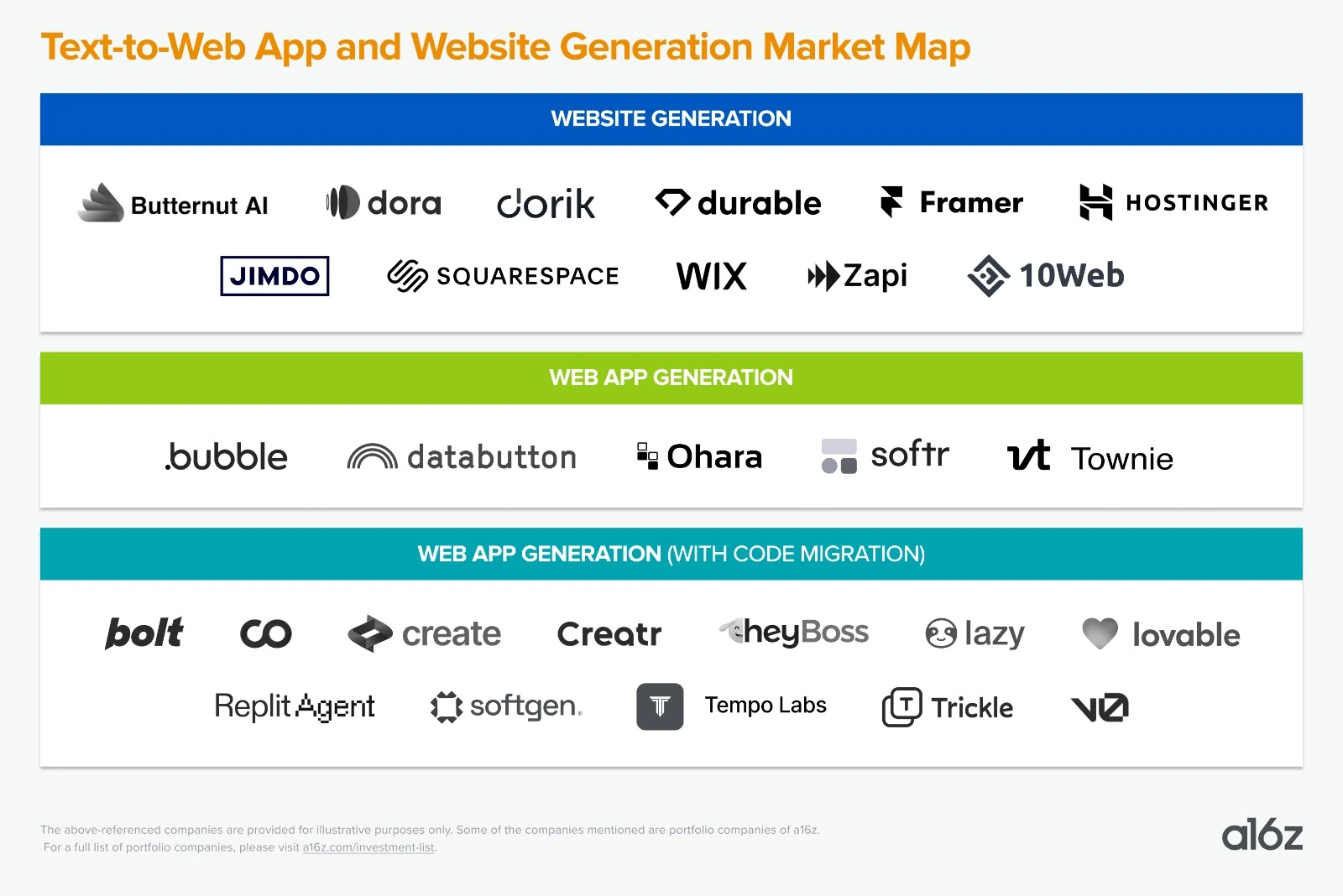
By early 2025, 300,000 products a month were being built on tools like these. Almost 70 vibe coding tools launched in under two years. The numbers felt like proof that something had genuinely changed.
It wasn't wrong to feel that way. The feeling just doesn't last as long as you'd hope.
The Prompt Cycle That Never Ends
Here's what actually happens when a non-technical founder tries to build a real product this way.
Something breaks. You describe it. The model fixes it. The fix introduces something new. You describe that. Another fix. Your context window fills up with the history of every iteration, every half-solution, every thing that almost worked.
The model starts losing track of what it built two sessions ago. New code has to account for old decisions it can't fully see anymore. The output gets fragile. More duct tape. More "this works, don't touch it."
And the whole time, your credits are burning.
36 out of every 100 prompts sent to these tools are error prompts. Not new features. Not improvements. Just trying to get back to a working state.
The tools work. That's not the issue. The issue is that when the model produces something that looks right but behaves wrong, you can't tell the difference. You're moving fast with no view of the road.
The Technical Walls Nobody Warns You About
AI tools are genuinely good at the visible parts of software. UI components. Forms. Data display. Anything you can describe and immediately eyeball.
Real software has a layer underneath that most people never see until they need it. That layer doesn't respond well to prompting.
-
Database schema design: Not a detail. The foundation. Get it wrong and you're not fixing a bug, you're running a migration. Normalization, indexes, relationships, the difference between storing a value and storing a reference to one. One bad call early costs you months later.
-
Authentication: Sounds solved. It isn't. Sessions vs. tokens. Refresh cycles. Role-based access. What happens when a session expires mid-request. What happens when someone tries to read data that isn't theirs. The failure modes go from broken UX to actual vulnerabilities.
-
Third-party integrations: Payments, email, storage, SMS. Each one has its own docs, its own edge cases, its own ways of breaking. Connecting them properly means knowing what "properly" looks like before you start, not after production catches fire.
These aren't prompting problems. They're architecture problems. Architecture takes someone who can hold the whole system in their head at once.
Some founders hit this wall at prompt 15. Most around prompt 30. The ones who push past 500 prompts have usually burned $2,000+ across every tool on the market before they get there.
It isn't dramatic. It's quiet. It's the moment you realize the problem in front of you isn't something you can prompt your way out of.
So you start looking for help.
Plan B: Hire a Freelancer
The obvious next move. Upwork alone does $1.1 billion in annual transactions, so clearly people use them. And the good ones really are talented.
But picture this. You run a welding supply business and you need an e-commerce site. You ask around, find someone through a friend of a friend, pay a deposit. The project runs late. The quote shifts. You spend more energy managing the person than watching anything actually get built.
That's the good version. Plenty of people get scammed outright, ghosted after the first payment, or handed something with security holes they won't find until it's too late.
Hiring a freelancer isn't just hiring a skill. You're inheriting their schedule, their communication habits, and their definition of "done." When any of those don't match yours, you're back where you started, except now with less runway.
It wasn't wrong to feel that way. But that feeling doesn't last as long as you'd hope.
Plan C: Go Straight to an Agency
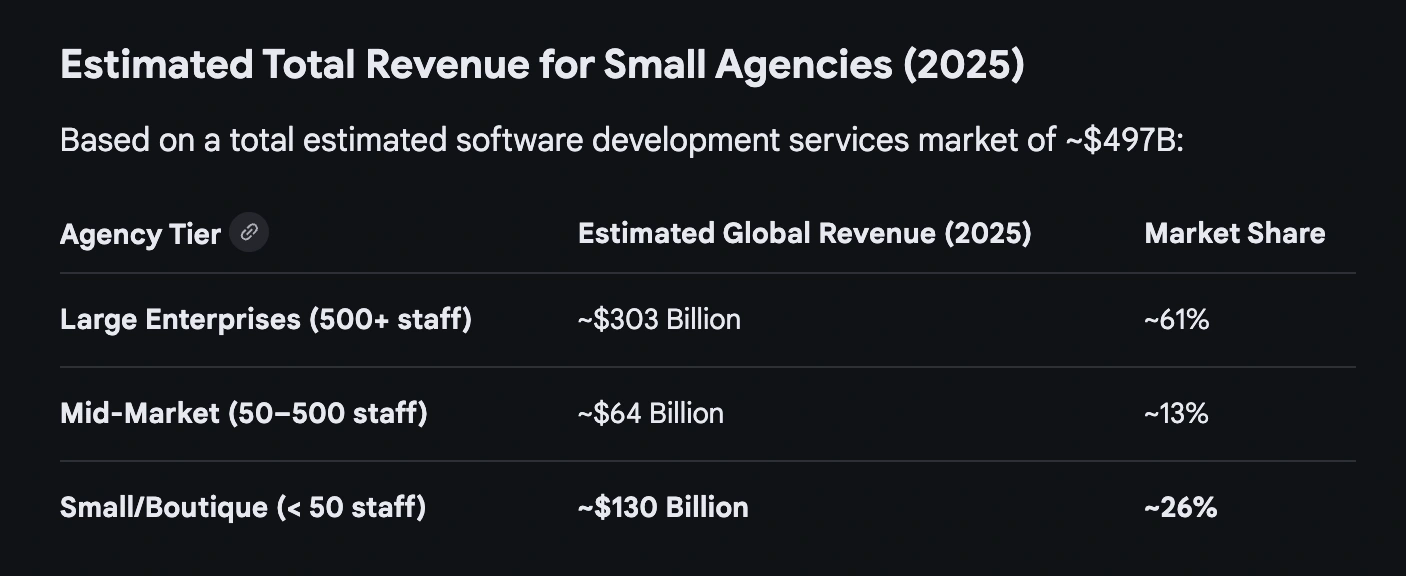
If a freelancer couldn't pull it off, the logic goes, an agency will. More structure. More accountability. A real team. Agencies with under 50 people billed $130 billion last year, so the value is there.
Until you actually go through the process. Kickoff call. Discovery phase. Proposal. Revisions on the proposal. A month passes before anyone writes a line of code, and your momentum is gone. The quote lands at fifty grand and a six-month timeline.
Agencies are good if you have the budget, the brief, and the patience. Most founders have one of the three.
Where That Leaves You
Vibe coding tool. Freelancer. Agency. Three real options, all useful in the right context, none of them quite right for a founder trying to build something complex and production-ready without a technical co-founder.
You started by building on a foundation you didn't fully understand. Then you handed that foundation to people whose definition of "done" didn't match yours. Then you sat through proposal rounds with the only group actually equipped to fix it. You took the long way around and ended up months behind, with less runway and more technical debt than when you started.
That's what's broken. Not the tools. Not the founders. The gap between what feels like building and what building actually takes.
We watched this happen to founder after founder. And we decided the answer wasn't a better prompt box. It was a system that stops asking you to work at both levels at once.
That's what we built - Meet Deepbuild

Co-founder and CEO of Creatr. Spends his time with founders who have tried every AI coding tool and still can't ship. Before Creatr, Kartik was a serial founder; the last of those startups found product-market fit in early 2020 and was ultimately shut down by the COVID standstill. Covered by Forbes India in 2021.
Related reading
- Freelancer vs agency vs AI tools vs Creatr - what to pickFour ways to build software. Only one clears time, cost, reliability, and ownership at once. The full comparison with specific numbers.
- Meet DeepBuild: Creatr ships production apps in 2 daysDeepBuild separates product description from technical execution. Founders stay in plain English; the system handles database, auth, integrations, and deploy.
- Why AI App Builders Get Your Requirements WrongAI builders let you start immediately, and that is the problem. Why gathering requirements before building produces better apps faster, with a real CRM example.