
Case study

An operations platform for warehouse businesses that connects leasing, billing and logistics

Built to replace spreadsheets and disconnected tools with one system for operators, tenants and dock workers.

Client
FlexBay OS
Industry
Real Estate & Logistics
Region
United States
Timeline
6 days
Solution
Operations Management

Summary

FlexBay warehouse operators manage buildings, units, tenants, leases, payments, maintenance and loading dock operations. At FlexBay OS, these workflows were spread across spreadsheets and separate tools, forcing teams to keep everything aligned manually.

We built one platform that connects the entire business. From digital leases and automatic billing to tenant services, maintenance and dock operations.

About the client

FlexBay OS helps warehouse operators who rent out smaller units run their entire business from one place.

FlexBay OS is built for operators who divide warehouse and industrial properties into smaller units and rent them to multiple businesses. These operators also manage shared services such as loading docks, deliveries and logistics.

The platform supports four users: platform owners, operators, tenants and dock workers. Each user has a separate view designed around their work.

The FlexBay team at a warehouse loading dock
An operator working through paper records at a warehouse desk

The challenge

The entire business ran across spreadsheets and tools that did not work together

Buildings, units, tenants, leases and billing were spread across disconnected spreadsheets and systems, forcing teams to keep everything updated by hand.

Billing was manual and prone to errors. Tenants had no single place to view their lease, access documents or pay, while leases signed through PDFs or email had to be entered again manually.

Unreliable internet made dock hours difficult to track. The platform also needed strict data separation so operators could never access another operator's information.

The solution

One platform to manage properties, tenants, billing and dock operations

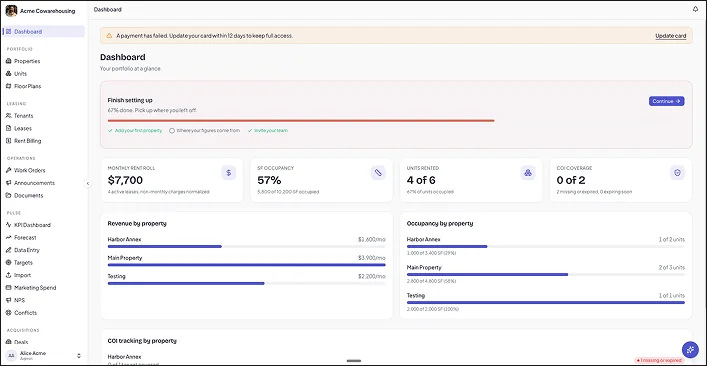
  1. The portfolio dashboard, showing rent roll, occupancy, units rented and revenue by property

    All operations in one place

    Before

    Buildings, units, tenants, leases, maintenance and dock work were managed across separate spreadsheets and tools.

    After - with Creatr

    Everything is connected in one platform, giving the team one place to manage the entire business while keeping information updated across every workflow.
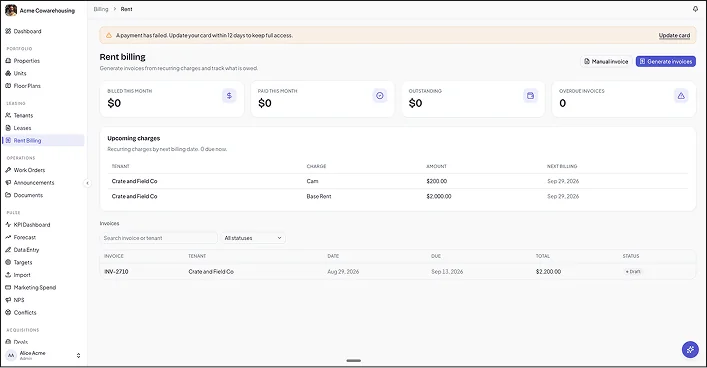
  2. The rent billing screen, with upcoming recurring charges and generated invoices

    Automatic billing & rent collection

    Before

    Bills were calculated and sent manually. A wrong entry could lead to an incorrect amount being charged to a tenant.

    After - with Creatr

    The platform calculates rent, checks the totals and generates each bill automatically. Tenants can pay online, with the money going directly into the operator's account.

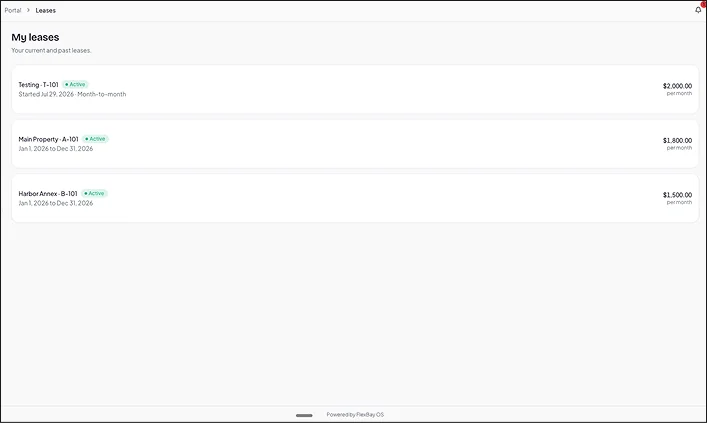
  3. The tenant portal, listing a tenant's active leases and monthly rent

    Tenant portal and digital leases

    Before

    Tenants had no single place to view their lease, access documents or pay. Leases were signed through paper or PDF and then entered again manually.

    After - with Creatr

    Tenants can view documents, receive updates and make payments through their portal. They can also sign leases online. Once signed, the lease is activated and a copy is saved automatically.

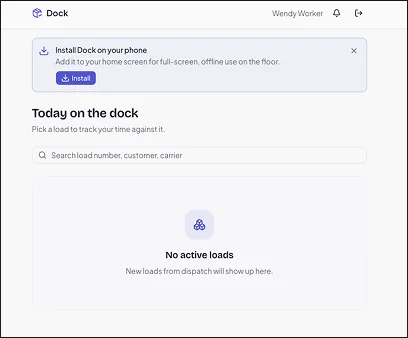
  4. The Dock app, installable to a phone home screen for offline use on the floor

    Offline dock time tracking

    Before

    Dock worker hours were difficult to track because the internet often dropped on the warehouse floor.

    After - with Creatr

    The worker timer continues running without an internet connection and safely syncs the recorded time once the connection returns.

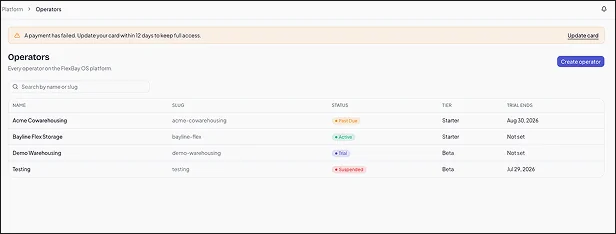
  5. The platform operators list, each with its own slug, status and tier

    Operators' data remains private.

    Before

    The platform needed to serve multiple operators without allowing one operator to see another's properties, tenants or payments.

    After - with Creatr

    Every operator's data is kept completely separate. Automated tests confirm that users can only access information belonging to their own business.

The build process

How the solution was built with Creatr

Day 1
Week 1
Week 2
Week 3
Week 4
  1. Discovery call, Day 1 to Week 1
  2. Plan - FRS doc, Day 1 to Week 1
  3. Frontend Prototype, Week 1 to Week 2
  4. Backend Build, Week 2 to Week 3
  5. Validation & Testing, Week 2 to Week 3
  6. Migration and go-live, Week 3 to Week 4
  7. Post Launch Support, Week 3 to Week 4

Founders quote

Creatr understood the complexity of FlexBay OS from the start. They brought everything we needed in one platform without oversimplifying how the business works.

- Andrew Runnette, FlexBay OS

The takeaway

FlexBay OS did not need another property tool. It needed one system for the entire operation.

Flexible warehouse businesses manage both properties and logistics, but most tools support only one side. By connecting tenants, leases, billing, maintenance and dock work, FlexBay OS gives every user one place to work and keeps the entire business in sync.

View Case StudiesBook a discovery call